
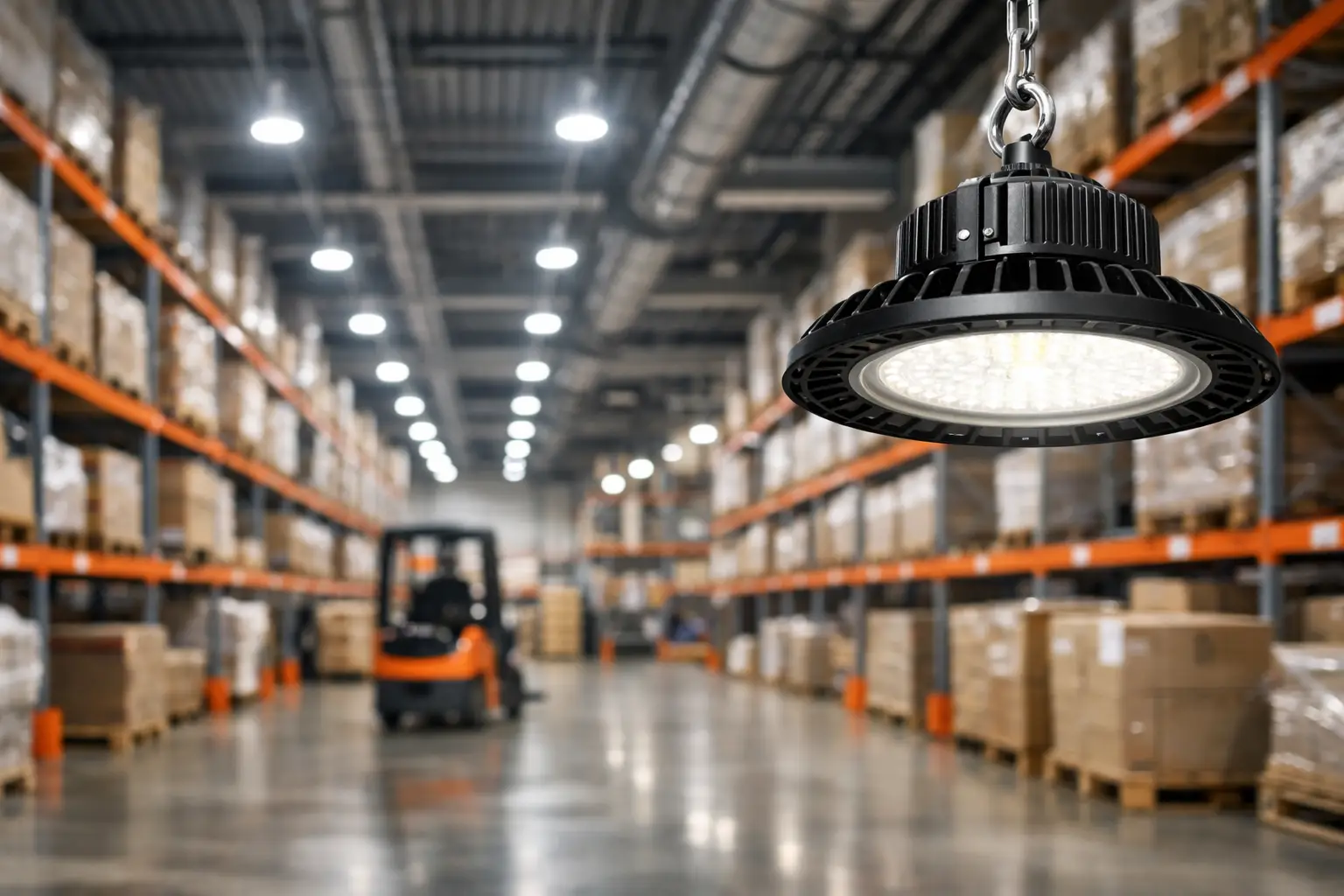
A warehouse can have plenty of light and still be poorly lit. Dark rack faces, harsh glare on forklift routes, shadowed loading areas, and inconsistent color between fixtures all create operational problems that a simple lamp replacement will not solve. The best warehouse lighting upgrades improve usable visibility where people work, reduce energy and maintenance exposure, and fit the installation realities of an active facility.
For facility managers, contractors, and owners, the right decision starts with the existing system. A newer metal halide high bay installation calls for a different approach than aging fluorescent strips, failed T5HO fixtures, or a building with high ceilings and constant forklift traffic. The goal is not to buy the highest-wattage LED fixture. It is to produce the right light level, with the right distribution, at an installed cost that makes business sense.
Start With the Work, Not the Fixture
Before selecting a fixture, assess what happens under it. Receiving docks, pick aisles, bulk storage, maintenance bays, and shipping areas have different visual demands. A high-bay fixture that works well over open pallet storage may create glare or poor vertical illumination in a narrow-aisle picking operation.
Look beyond average foot-candle readings. Workers need to see labels, rack locations, floor hazards, dock edges, and moving equipment. Vertical light on rack faces often matters as much as horizontal light on the floor. Color quality and uniformity matter too, particularly where employees read product markings, inspect goods, or operate equipment through multiple shifts.
A practical survey should document mounting heights, fixture spacing, existing wattage, condition of housings, available voltage, control zones, and operating hours. It should also identify areas where light is blocked by racks, ductwork, cranes, or stored material. This information prevents a common mistake: replacing each old fixture one-for-one without correcting the layout that caused poor visibility in the first place.
Best Warehouse Lighting Upgrades by Existing System
The most effective upgrade path depends on the fixture already installed and the condition of its housing, wiring, and mounting location. Replacement fixtures are not always the best answer. In many facilities, a properly engineered retrofit delivers the strongest project economics.
Upgrade aging fluorescent high bays and strips with LED retrofits
Fluorescent systems are often the clearest retrofit opportunity. They consume substantial energy, require ongoing lamp and ballast maintenance, and can produce uneven light as components age. A quality LED retrofit can use the existing fixture body while replacing the inefficient light source and driver components.
This approach can reduce material waste and avoid the labor involved in removing, disposing of, and replacing complete fixtures. It is particularly useful when existing housings are structurally sound and positioned correctly for the space. The key is to use a retrofit designed for the fixture, not a generic LED component forced into a legacy housing.
For projects where labor cost and operational interruption are major concerns, tool-free magnetic retrofit systems can change the installation equation. Optilumen’s magnetic retrofit kits are engineered for installation in roughly three to four minutes by existing maintenance personnel, rather than requiring extensive electrical labor for every fixture. That can be a meaningful advantage in active warehouses, provided the project scope, local code requirements, and site conditions support the installation plan.
Replace metal halide high bays when distribution or condition is the problem
Metal halide fixtures typically offer a large energy-saving opportunity, but wattage reduction alone should not drive the replacement specification. These systems often suffer from long warm-up times, lumen depreciation, color shift, and poor performance after restrikes. LED high bays provide instant-on operation and more stable output over their service life.
A complete fixture replacement makes sense when housings are corroded, reflectors are damaged, mounting is unsafe, or the original fixture distribution does not suit the current floor plan. Select a fixture with an optical pattern matched to mounting height and aisle geometry. Wide distributions can work in open storage areas, while tighter distributions may improve light placement in racking aisles.
Add targeted light where general lighting falls short
Not every lighting issue requires more high bays. Dock doors, packing stations, inspection tables, electrical rooms, and rack labels may need supplemental task or linear lighting. Targeted fixtures can improve safety and accuracy without over-lighting the entire building.
This is also where controls deserve careful consideration. Occupancy sensors can reduce run time in intermittently used spaces such as storage rooms, maintenance areas, or isolated aisles. Daylight harvesting can help near skylights or dock doors. In a continuously occupied, high-activity warehouse, however, aggressive sensor settings can be frustrating and may produce little additional savings. Controls should match actual work patterns, not simply be added because they are available.
Specify for Delivered Lumens and Fixture Efficacy
Warehouse projects are frequently evaluated on fixture watts. That is understandable, but it is incomplete. Lower watts do not automatically mean lower operating cost if the fixture fails to provide adequate light or requires a denser layout. Evaluate delivered light, distribution, thermal management, driver quality, and the fixture’s efficacy in lumens per watt.
High efficacy matters because it allows a facility to achieve required light levels with less energy. It can also improve rebate eligibility, since many utility programs reward high-performing equipment rather than basic LED conversion alone. Fixture efficacy above 190 lumens per watt can materially improve the savings calculation when it is paired with useful optical performance and reliable components.
Color temperature should be selected for the work environment. Many warehouses use 4000K or 5000K lighting for a bright, alert visual environment. A cooler color temperature can improve perceived brightness, but it should not be used to compensate for insufficient fixture quantity or poor distribution. Confirm color rendering requirements when product inspection, quality control, or color-sensitive materials are involved.
Protect the Installation Schedule
A lighting project can look attractive on a spreadsheet and become expensive on the floor. Lift rental, electrician time, fixture disposal, production downtime, and access constraints can outweigh small differences in fixture price. This is why installation method belongs in the initial comparison, not at the end.
For retrofit projects, verify whether the existing housing can be retained, how the new system mounts, and what work must occur at each fixture. Tool-free mounting can reduce time at height and make phased upgrades more realistic. A maintenance team may be able to complete sections during planned downtime, reducing disruption to shipping, receiving, and inventory activity.
That said, speed should not come at the expense of documentation or safety. Confirm branch circuit condition, grounding, emergency lighting requirements, fixture listing, and any local permitting obligations. Contractors should also plan for safe access around active forklift routes and coordinate work zones with warehouse leadership.
Build the Financial Case Around Total Project Cost
A credible lighting proposal includes more than annual kilowatt-hour savings. It should account for fixture cost, installation labor, lifts, disposal, maintenance reduction, utility rebates, operating hours, and expected system life. In many cases, the highest-efficiency option has a higher purchase price but a lower total installed and operating cost.
Rebates can significantly affect payback, but they should be validated early. Program requirements may set minimum efficacy thresholds, require pre-approval, limit eligible product types, or specify controls. Do not assume a rebate applies after equipment is ordered. Product documentation and photometric information should be available before the application is submitted.
Long-term maintenance is equally relevant. Warehouses with high ceilings incur real costs every time a driver, lamp, or fixture fails. A durable LED system reduces service events, lift use, and disruption beneath the fixture. The value is especially clear in facilities that operate multiple shifts or have hard-to-access lighting above conveyors, racks, or production equipment.
Make the Upgrade Easy to Operate and Maintain
The best specification is one the facility can live with for years. Standardize fixture families where possible so drivers, optics, and replacement components are easier to manage. Keep control zones understandable for building staff. Document fixture locations, wattages, color temperatures, and driver information before closeout.
A pilot installation can be worthwhile when the facility has unusual ceiling heights, narrow aisles, mixed storage, or sensitive visual tasks. Install a representative section, evaluate light on the floor and rack faces, gather employee feedback, and adjust before committing to the entire building. A small validation step can prevent a large-scale layout mistake.
The strongest warehouse lighting upgrade is not the one with the lowest fixture price. It is the one that gives people clear, consistent light, minimizes installation disruption, qualifies for the best available incentives, and keeps delivering savings long after the project is complete.
Leave a Reply