
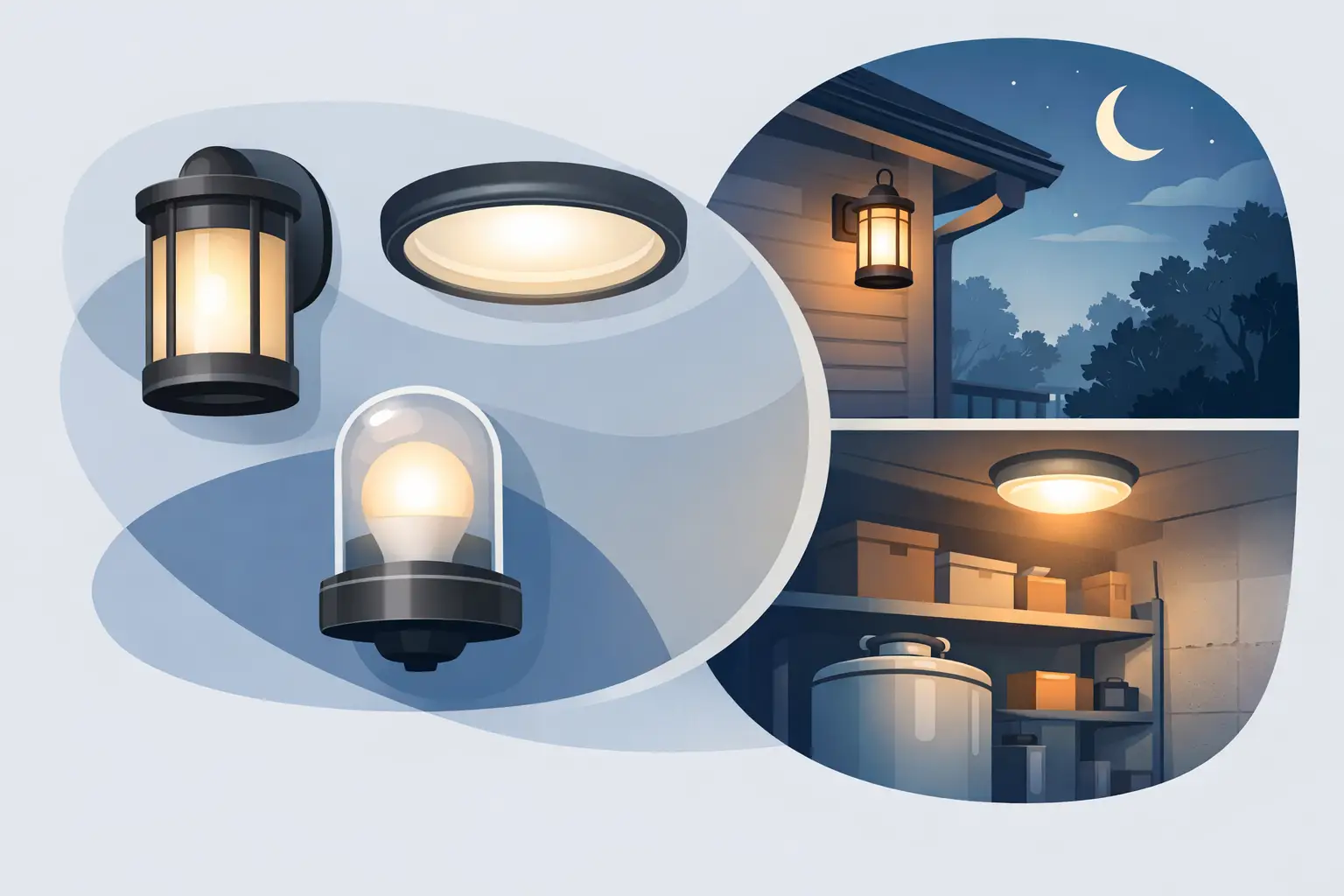
A fixture in a dusty warehouse, a cold storage room, or a parking garage does not behave like a fixture in a clean office ceiling. That is usually where the question comes up: what is enclosed luminaires, and why does that label matter when you are selecting LED lamps or planning a retrofit? In practical terms, an enclosed luminaire is a light fixture that surrounds the lamp with a lens, diffuser, or housing that limits open air around the light source. That enclosure changes heat buildup, protection level, maintenance needs, and product compatibility.
For contractors, facility teams, and distributors, this is not just a definition issue. It affects whether a lamp runs too hot, whether a retrofit lasts as expected, and whether a project delivers the savings promised on paper.
What is enclosed luminaires in simple terms?
The phrase is often used awkwardly in product searches, but the meaning is straightforward. Enclosed luminaires are fixtures where the lamp operates inside a mostly sealed or covered housing rather than in open air. You will see this in vapor-tight fixtures, many wall packs, decorative site fixtures, sealed high bays, some troffers with tight lenses, and outdoor fixtures designed to keep out moisture, dust, insects, or debris.
The enclosure can be glass, acrylic, polycarbonate, or metal with limited venting. What matters is that the fixture traps more heat around the lamp and electronics than an open fixture would.
That distinction matters even more with LED products. LEDs are efficient, but they still generate heat. And unlike older fluorescent systems, LED performance and life are closely tied to thermal management. If the fixture holds heat in, the product inside needs to be designed for that environment.
Why enclosed fixtures change LED performance
When people think about lighting upgrades, they usually focus on wattage, light output, and rebate value. Those are important, but fixture environment is just as critical. A lamp or retrofit rated for open fixtures may underperform in an enclosed luminaire because the internal temperature climbs higher than expected.
Excess heat can lead to faster lumen depreciation, color shift, driver stress, and shorter system life. In simple terms, the light may still turn on, but it may not maintain output or longevity the way the spec sheet suggests under ideal conditions.
This is where many retrofit mistakes happen. A product may fit physically, but that does not mean it is a good match thermally. If the fixture is enclosed, the LED solution needs to be rated and engineered accordingly.
Where enclosed luminaires are commonly used
Commercial and industrial spaces use enclosed fixtures for good reasons. In harsh environments, open fixtures create maintenance problems and reduce reliability. Enclosed luminaires help protect the light source from contamination and damage.
You will commonly find them in food processing areas, manufacturing plants, utility spaces, stairwells, exterior canopies, parking structures, car washes, cold storage, and areas with dust, moisture, or airborne particles. They also appear in architectural and decorative outdoor fixtures where appearance and weather protection matter.
In some spaces, the enclosure is there for code, sanitation, or durability. In others, it is mainly for environmental protection. Either way, the fixture design affects the heat profile, and that changes what lighting products should go inside.
Open fixture vs enclosed luminaire
The easiest comparison is airflow. An open fixture allows heat to dissipate more freely around the lamp or LED system. An enclosed luminaire restricts that airflow and can create a hotter operating chamber.
That does not automatically make enclosed fixtures a problem. In many facilities, they are the right solution. The issue is compatibility. If you use a lighting product that assumes open-air cooling in a sealed or semi-sealed fixture, you introduce risk.
This is why enclosed-rated lamps and purpose-built retrofit systems matter. The fixture itself is not the weak point. The mismatch between product design and fixture environment usually is.
How to tell if a luminaire is enclosed
Some fixtures are obviously enclosed. If there is a lens or cover fully separating the lamp chamber from the room or weather, that is a strong sign. Vapor-tight fixtures and many outdoor housings are clear examples.
Others are less obvious. A fixture may have a diffuser and still include some venting, or it may be partially enclosed in a way that still traps substantial heat. That is where manufacturers’ documentation becomes important. Fixture construction, airflow path, and internal cavity size all matter.
If you are evaluating an existing site, do not rely on appearance alone. Check the fixture type, review the lamp compartment design, and confirm how the replacement lamp or retrofit is rated. In retrofit projects, a quick assumption at survey stage can turn into callbacks later.
Why enclosed ratings matter on LED lamps
Many LED replacement lamps carry specific language about enclosed fixtures. Some are rated for use in enclosed luminaires. Others are not. That language is there because the lamp manufacturer has tested thermal performance under those conditions.
If a lamp is not rated for enclosed use, installing it in that environment can void warranty coverage and shorten life expectancy. Even if it works initially, long-term performance may not hold.
For facility managers, that means more than a technical compliance detail. It affects maintenance schedules, replacement cycles, labor costs, and the credibility of the upgrade. A low-cost lamp that fails early in an enclosed fixture usually becomes an expensive decision.
Enclosed luminaires and retrofit strategy
This is where a fixture-by-fixture mindset pays off. In older buildings, especially those with fluorescent systems, not every existing fixture should be treated the same way. Some housings are open enough for one type of LED solution. Others need an enclosed-rated product or a more complete retrofit approach.
In many commercial and industrial upgrades, a dedicated retrofit kit is a better path than relying on simple lamp replacement. A well-designed retrofit can manage heat more effectively, improve efficacy, and reduce the compromises that come with trying to force a lamp into an old fixture design.
That is particularly true when the goal is long life, rebate performance, and fast installation without repeated service calls. For contractor-led projects, labor and reliability are often worth more than the apparent savings of a quick lamp swap.
Trade-offs to consider before choosing a product
Enclosed luminaires offer protection, but that protection comes with design constraints. A sealed fixture may be the right choice for the environment while still requiring more care in product selection. There is no universal answer that works across every application.
If the fixture is in a wet, dusty, or abusive environment, keeping the enclosure may be essential. If the existing housing is outdated and thermally restrictive, replacing or retrofitting the internals may produce better long-term results than using a basic replacement lamp. If maintenance access is difficult, product life becomes even more valuable.
The right decision depends on operating hours, ambient temperature, fixture condition, labor availability, and expected payback. A warehouse running lights 24/7 has a different risk profile than a low-use back-of-house corridor.
What buyers should ask before approving a lighting upgrade
Before signing off on products for enclosed fixtures, ask whether the LED lamp or retrofit is explicitly rated for enclosed luminaire use. Ask how thermal management is handled. Ask whether the warranty supports that installation condition, and whether real project savings still hold when the product is used in a hotter fixture environment.
For distributors and contractors, this is also a margin protection issue. The fewer assumptions made upfront, the fewer problems show up after install. Product fit, ease of installation, and long-term performance all need to line up.
Manufacturers that understand retrofit realities tend to be more useful here than suppliers pushing generic commodity products. In enclosed fixture applications, the details matter. A few minutes spent validating fixture conditions can prevent months of avoidable maintenance.
When enclosed luminaires are the right choice
Enclosed luminaires are not a niche category. They are a standard part of many commercial and industrial lighting systems because they solve real environmental problems. The key is respecting what the enclosure does to heat, serviceability, and product compatibility.
If you are planning an LED upgrade, treat enclosed fixtures as their own category, not just another line item in the count. That approach leads to better product selection, stronger project economics, and fewer surprises after turnover. For teams focused on performance, installation efficiency, and long-term operating savings, that is where better lighting decisions start.