
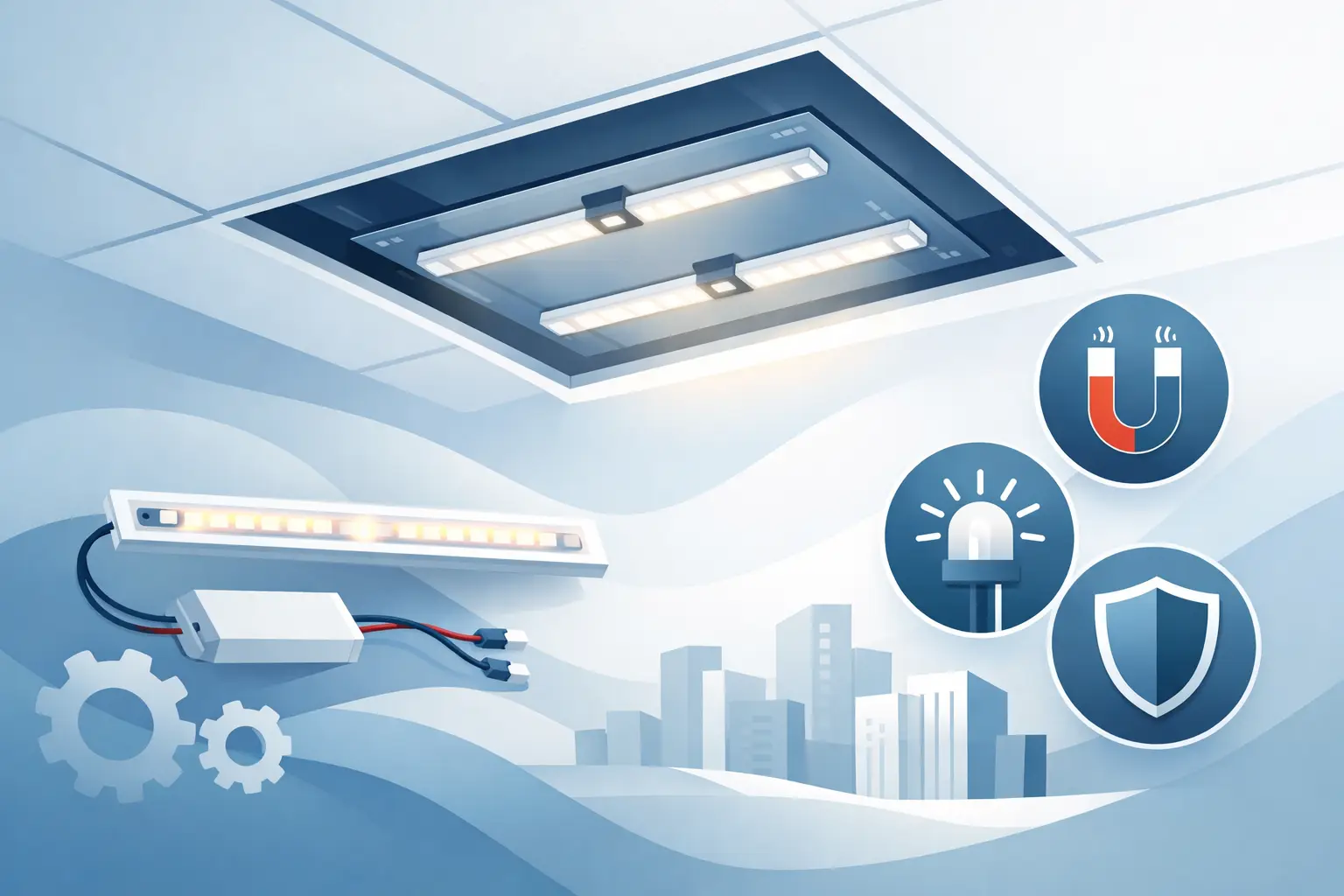
When a fluorescent fixture upgrade turns into a multi-hour labor event, the fixture is no longer the problem – the retrofit strategy is. A magnetic LED retrofit kit is built to change that equation by cutting install time, reducing disruption, and improving performance in the same step. For commercial and industrial buyers, that matters more than a spec sheet headline because labor, downtime, and long-term maintenance often decide whether a project pays off.
Why a magnetic LED retrofit kit changes the job
Traditional retrofit projects can look efficient on paper and still create drag in the field. If a product requires extensive rewiring, multiple loose parts, or a licensed electrician for every fixture, project costs rise fast. That affects contractors trying to keep crews productive, facility teams trying to limit intrusion, and ownership groups trying to justify capital spend.
A magnetic LED retrofit kit simplifies the physical install. The magnetic mounting approach removes unnecessary steps and helps position components quickly inside the existing fixture housing. When the kit is engineered well, the result is a cleaner workflow with fewer opportunities for error. That is not just a convenience issue. It directly affects labor cost, scheduling, and consistency across large-volume projects.
This is especially relevant in occupied spaces such as schools, warehouses, offices, healthcare support areas, and commercial buildings where access windows are limited. The faster the retrofit, the less disruption to operations.
The real buying criteria are not just watts and price
A lot of retrofit decisions still get narrowed down to fixture wattage and unit cost. That is understandable, but it misses the factors that usually drive total project value.
Installation time is one of the biggest. If a kit installs in minutes instead of requiring a more involved process, labor savings can be substantial across hundreds or thousands of fixtures. In many real-world jobs, that labor reduction has a bigger financial impact than small differences in product price.
Efficacy is another major factor. Higher lumens per watt means more light output for less energy consumed, which improves rebate potential and accelerates payback. For facility managers and property owners, that translates into lower utility expense and stronger long-term savings. For distributors and contractors, it creates a clearer economic case for the customer.
Then there is product life. A retrofit that performs well for years without frequent failures reduces maintenance calls, replacement planning, and occupant complaints. In industrial and commercial facilities where access equipment or off-hours service is required, maintenance costs can be significant. Paying attention to longevity is not conservative buying. It is cost control.
Magnetic LED retrofit kit performance in the field
The difference between a product that tests well and one that works well on jobsites usually comes down to engineering discipline. Contractors and maintenance teams notice the details quickly. Does the kit fit common fixture types cleanly? Are components secure once mounted? Is wiring straightforward? Can the install be completed predictably across varying site conditions?
That is where a field-aware design stands apart from generic commodity retrofits. The best retrofit kits are built around how people actually perform upgrades, not around what looks acceptable in packaging. A tool-free magnetic design, for example, can dramatically shorten the install cycle while reducing training burden. In the right application, that also opens the door for existing maintenance personnel to complete installations rather than requiring a skilled electrician at every step.
That labor flexibility matters. It lowers project cost and can make upgrades practical in facilities that would otherwise postpone them because of labor availability or scheduling pressure.
Where the ROI really comes from
Energy savings are the obvious source of return, but they are only part of the story. A better magnetic LED retrofit kit improves ROI through four channels at once: lower installation labor, reduced energy consumption, stronger utility rebates, and lower maintenance over time.
That combination is why high-efficacy retrofits often outperform lower-priced alternatives in total value. A cheaper kit may reduce first-cost pressure, but if it takes longer to install, delivers lower rebate eligibility, or underperforms over its service life, the project economics can weaken fast.
For buyers managing portfolios, this matters across every building. A small performance gap per fixture becomes a major budget difference when multiplied over large counts. The same is true for labor. Saving even a few minutes per fixture has real financial impact at scale.
This is one reason many experienced buyers look beyond advertised compatibility and ask harder questions about fixture efficacy, install time, and expected life. Those answers usually reveal whether a retrofit is designed for long-term value or simply priced to win a quote.
What to ask before specifying a magnetic LED retrofit kit
A good retrofit conversation should move past general claims quickly. The better questions are practical.
Start with installation. How many minutes does the average fixture take in the field, not just in a controlled demo? What level of labor is required? If the product is marketed as simple, the install process should support that claim without hidden complexity.
Next, look at delivered performance. High efficacy is valuable, but it should come with consistent light quality and reliable operation. Ask how the kit performs in the actual fixture types being upgraded. Existing housing conditions, lens choices, and application heights can all affect results.
Then evaluate financial return. What rebates are realistically available based on the kit’s performance? How quickly does the project pay back once labor and maintenance are factored in? Buyers who only compare purchase price often miss the stronger business case sitting in total installed cost.
Finally, consider manufacturer support. Commercial retrofits do not happen in a vacuum. Contractors, distributors, and facility teams need responsive technical guidance, stable product quality, and confidence that the manufacturer understands project realities. That support can make the difference between a smooth rollout and a costly series of callbacks.
Why efficiency leadership matters
Not all high-efficiency products create the same project value. Once fixture efficacy gets into top-tier territory, buyers gain more than lower wattage. They gain access to stronger rebate opportunities and better economics across the life of the installation.
A manufacturer like Optilumen has focused heavily on this point by developing retrofit systems that pair tool-free magnetic installation with fixture efficacy above 190 lumens per watt. That kind of performance changes the financial model. It supports some of the largest rebate outcomes available, improves payback speed, and extends savings well beyond the initial upgrade window.
For facilities with aging fluorescent systems, the benefit is straightforward. You are not just replacing a light source. You are improving a business asset that affects utility spend, maintenance planning, occupant experience, and capital allocation.
The trade-offs are real, and context matters
There is no single retrofit answer for every building. Some fixtures are too damaged, outdated, or inconsistent to justify retrofit and should be replaced entirely. In other cases, a well-designed retrofit is clearly the smarter move because it preserves the existing fixture body while upgrading performance at lower installed cost.
Application also matters. Warehouses, back-of-house spaces, offices, and institutional buildings may each prioritize different outcomes. One site may value speed of install above all else because work must happen during narrow maintenance windows. Another may focus on maximizing rebates and lifecycle savings across a large portfolio. A third may need to minimize disruption in occupied areas where access and noise are sensitive concerns.
That is why the best buying process starts with the job conditions, not just the catalog page. A magnetic LED retrofit kit performs best when its design advantages match the operational goals of the project.
A practical standard for buyers
If you are evaluating retrofit options for a commercial or industrial facility, the standard should be simple. The product should install fast, perform efficiently, last a long time, and make financial sense beyond the purchase order.
That sounds obvious, but many retrofits miss at least one of those marks. Some are efficient but slow to install. Some are inexpensive but weak on longevity. Some promise simplicity but shift too much burden onto the installer. The strongest options are engineered to solve the full project problem, not just part of it.
A magnetic LED retrofit kit earns its place when it reduces labor pressure, improves rebate and ROI potential, and delivers dependable lighting for years. For contractors, that means a more profitable job. For facility managers, it means fewer headaches. For property owners and business leaders, it means the upgrade pays off where it should – in operational performance and long-term savings.
The best retrofit products do not ask your team to work around their limitations. They are designed to make the job easier, faster, and more valuable from day one.